Designed to Protect. Engineered to Deploy.
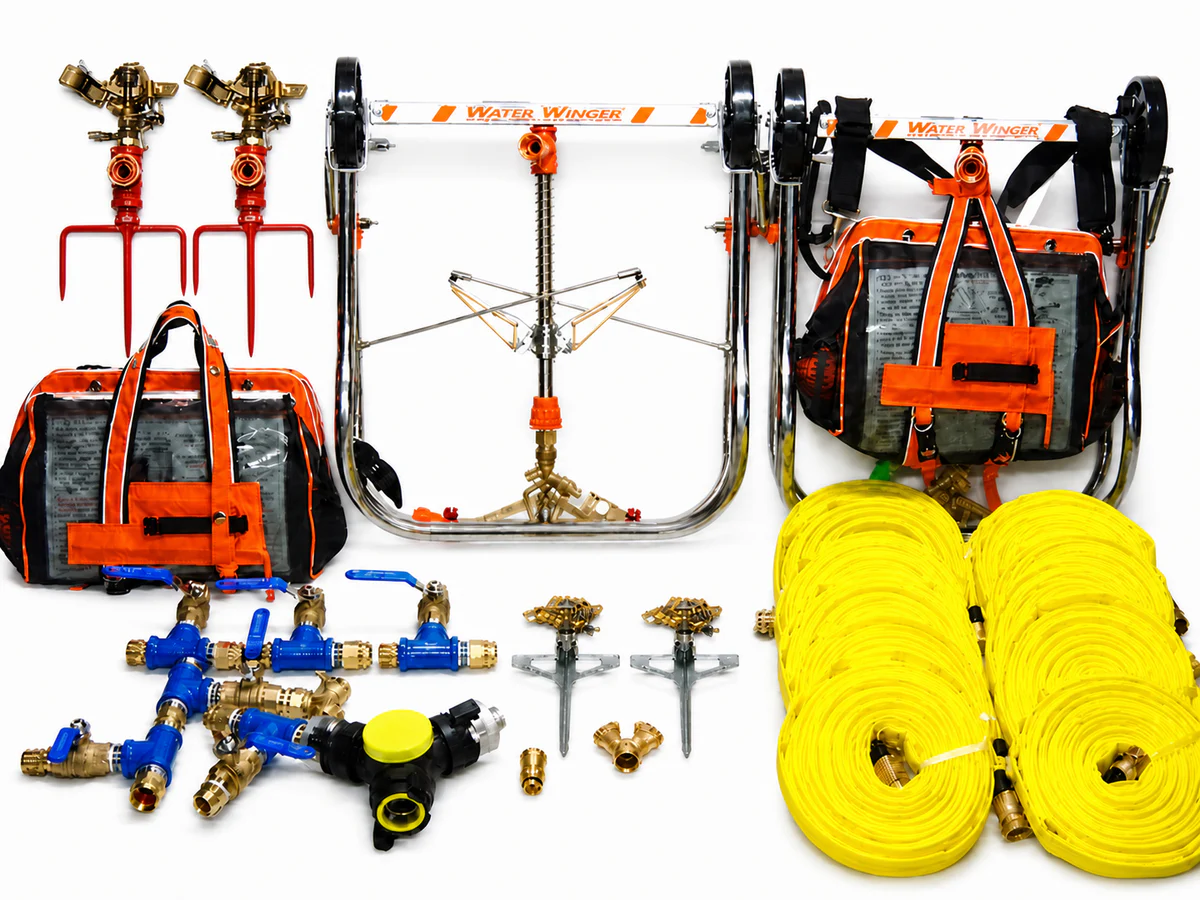
A complete, reusable rooftop protection system designed for serious soaking and straightforward ground deployment.
- No ladder required. Deploy safely from the ground without carrying equipment onto steep or elevated roofs.
- Reach difficult rooflines with long-throw coverage for roofs, eaves and nearby vegetation.
- Create a massive wet zone. One peak-mounted Water Winger can cover up to 7,850 sq. ft. at a 50-foot radius in calm conditions.
From concern to confidence
Protect the Place You Can’t Replace.
Wildfire preparation can feel complicated. Begin with the structures that matter most, match protection to the water available, and prepare your system before wildfire season. Our planning tools and direct support can help turn concern into a clear, practical plan.
- 1Start with your property
Identify the homes, cabins, shops and other structures you want to protect, then consider roof size, height and surrounding exposure.
- 2Match protection to your water supply
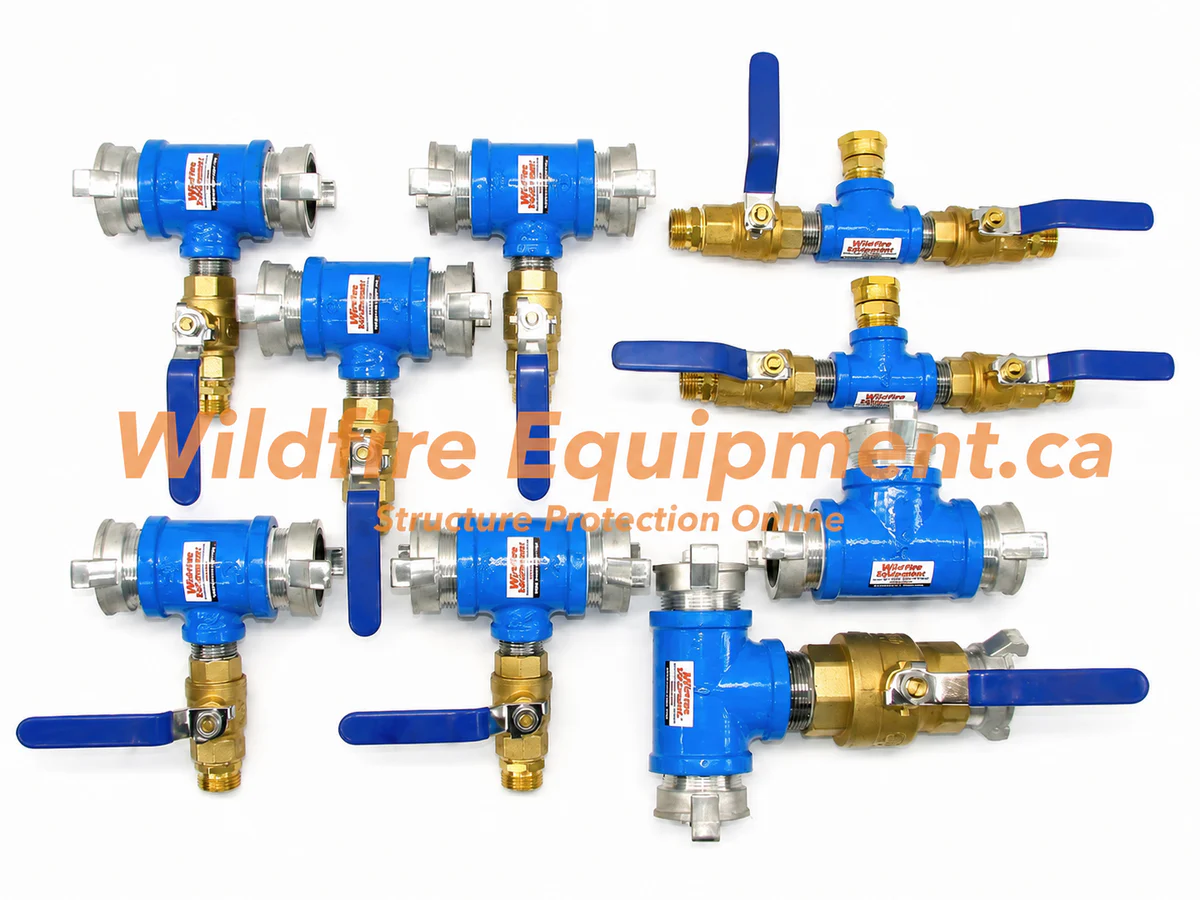
Confirm available pressure and flow, then choose suitable sprinklers, hose and pump equipment for the planned coverage.
- 3Prepare before wildfire season
Assemble, test and store the system so it is familiar, dependable and ready when needed.
- Stainless steel and aluminum construction
- Ground-deployed to roof peaks
- Powerful stream for windy conditions
- Nozzles included to run at 5, 7 or 9 GPM at 50 PSI.
Create large wet zones around structures
Cover 7,850 Square Feet with One Water Winger
Typical coverage with stock nozzles
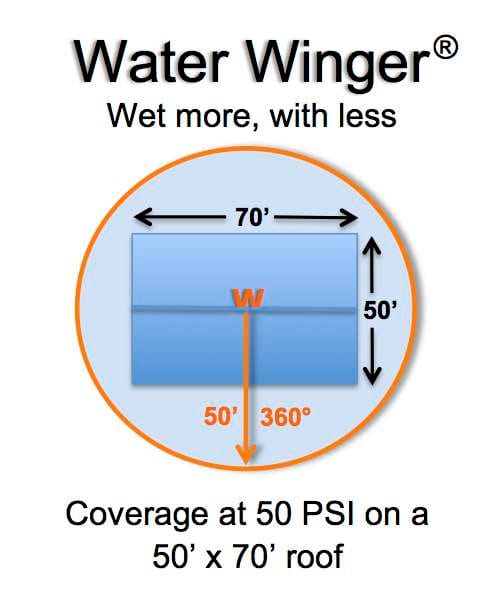

Planning note: Actual coverage varies with water pressure and flow, nozzle selection, wind, roof height and surrounding terrain.
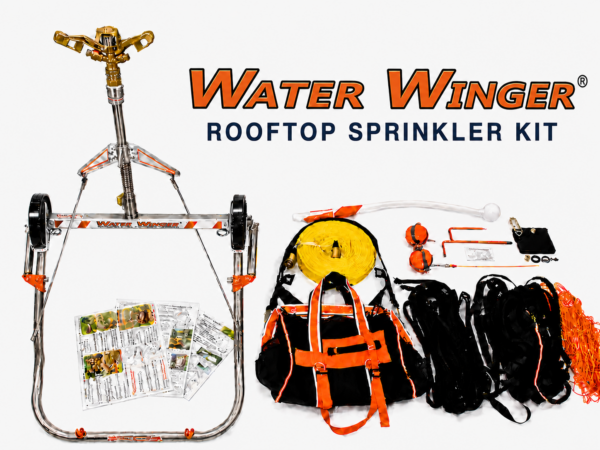
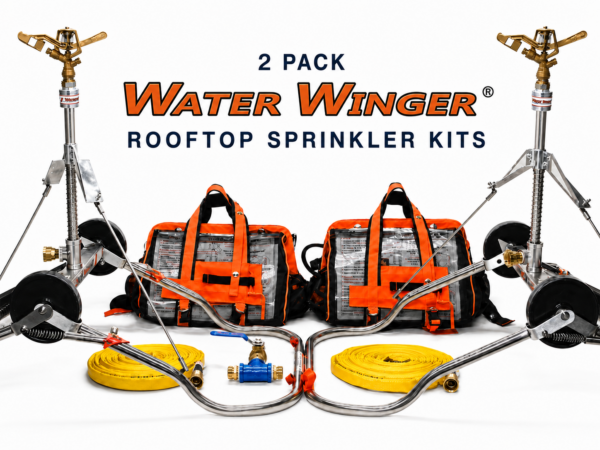
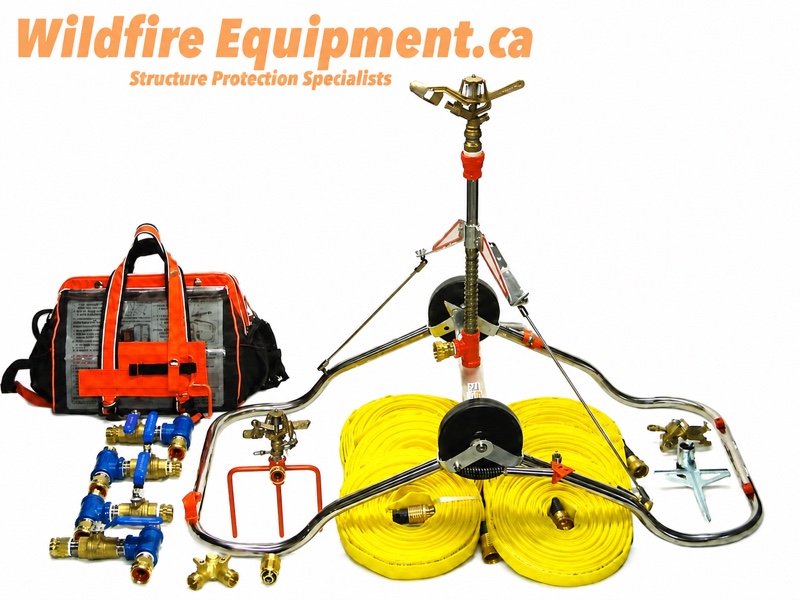
Simple deployment
From Storage to Roof Peak in Three Steps
Send the Line Over
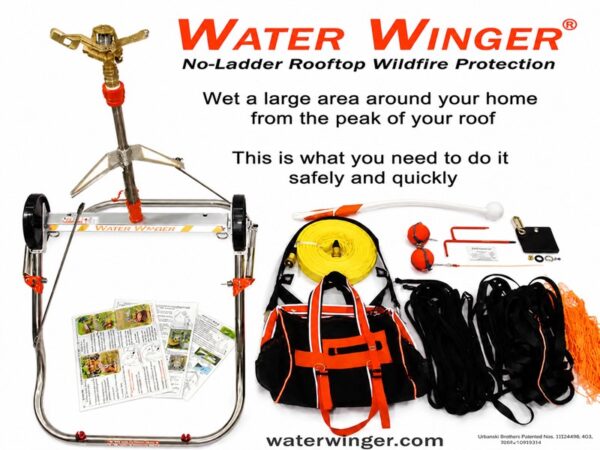
Use the throwing ball and ball chucker to place the deployment line over the roof.
Prepare Sprinkler for Deployment
Straighten the ropes, attach the hose while remaining safely on the ground.
Pull Into Position
Pull the sprinkler up onto the roof peak, turn on the water supply and check coverage.
Choose your application
Protection Equipment for Properties and Crews
 HomeownersPrepare homes, cabins, farms and remote properties.Explore homeowner systems →
 Community GroupsBuild coordinated equipment packages around local risks.Explore community options →
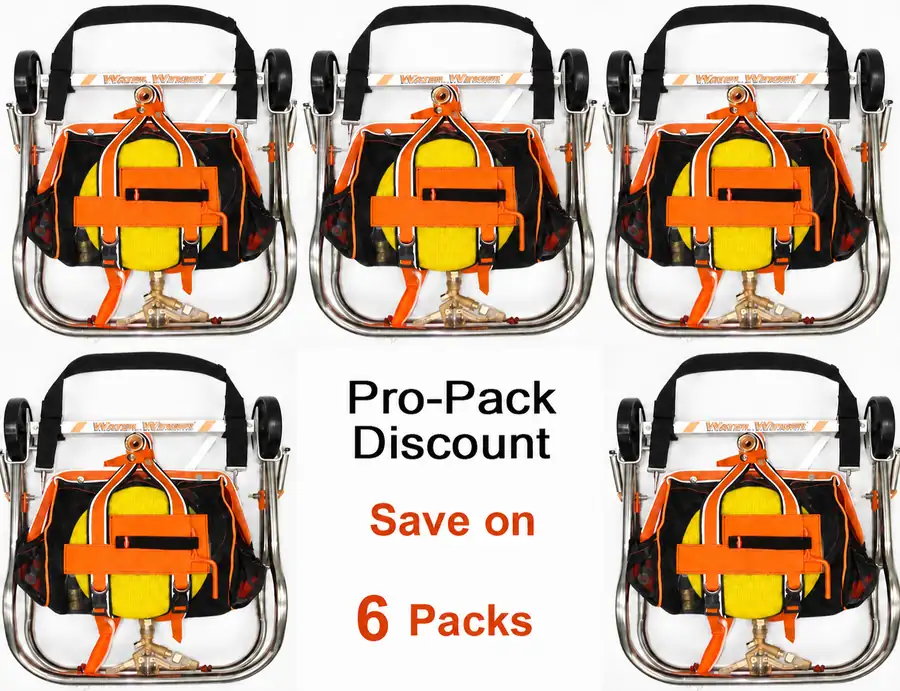 Structure Protection CrewsDeploy rooftop sprinklers quickly without ladders or roof access.Explore professional systems →
Be Ready Before the Threat Arrives
Build Your Wildfire Protection System
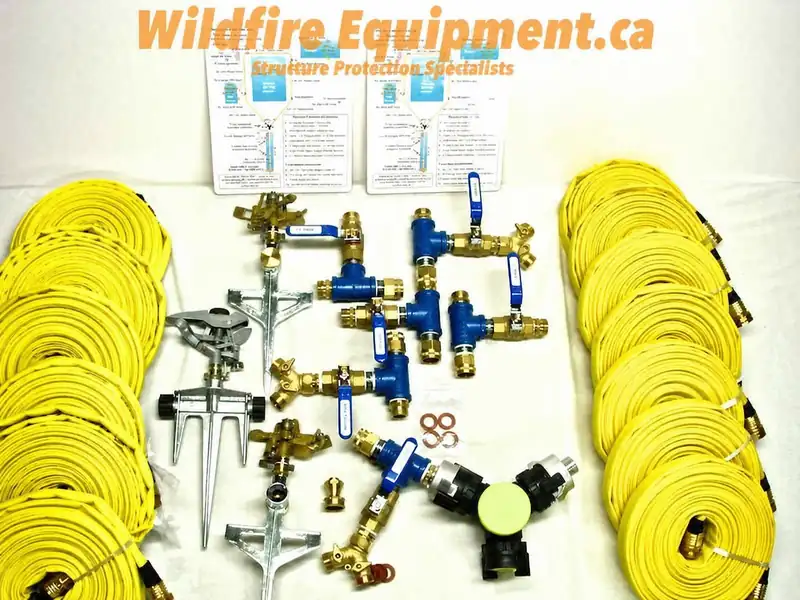
Use the dedicated System Designer to check pump, hose and sprinkler capacity, shop complete rooftop kits and structure protection packages, or build your own system from our parts shop.
Helpful answers
Water Winger FAQ
Clear answers about coverage, deployment, water supply, equipment selection and support.
How do Water Winger rooftop sprinklers help protect structures?
Water Wingers create the largest wet zone of any rooftop sprinkler on the market, spreading water across the roof and surrounding property. No other single rooftop sprinkler provides a better way to create such a large wet zone around a structure. This broad coverage helps extinguish windblown embers and increases moisture around the structure before a wildfire arrives.
Can Water Wingers be deployed without a ladder?
Yes. A Water Winger is pulled onto the roof peak from the ground using the included line system, avoiding the risks of climbing onto a high, steep or wet roof.
What water supply does a Water Winger require?
Water Wingers perform best with approximately 40–80 PSI. Each kit includes 3/16-inch and 5/32-inch main nozzles plus a 3/32-inch spreader nozzle, providing approximately 5–9 gallons per minute at 50 PSI depending on the selected configuration.
Can a Water Winger operate from a household well?
Yes, provided the well and pump supply sufficient pressure and flow. Most modern private-well systems use adjustable pressure controls or regulators that may allow higher operating pressure for wildfire protection. Any adjustment should be made by a qualified well technician or plumber and remain within the pump, pressure tank, piping and local-code limits. For a household system, a plumber can often install a dedicated, full-flow exterior irrigation or fire-protection connection that avoids restrictive household fixtures and supports better sprinkler coverage. Available pressure and flow still determine how many sprinklers can operate simultaneously.
How much area can one Water Winger cover?
Under suitable conditions, one Water Winger can wet an area approximately 100 feet in diameter—up to about 7,850 square feet. Coverage varies with water pressure, nozzle configuration, wind and roof height.
What types of roofs can it be used on?
Its self-adjusting legs are designed to straddle many common roof peaks and pitches. The temporary system can be removed when the wildfire threat has passed.
Can one person deploy a Water Winger?
Many people can deploy one using the included throwing ball, line system and ball chucker. Larger or more complex structures may be easier to protect with assistance.
Where are Water Wingers made?
Water Wingers are built in Salmon Arm, British Columbia, using Canadian machining and fabrication. The stainless-steel and aluminum frame is fitted with a brass impact sprinkler, and the mesh rigging bags and deployment lines are also made in Salmon Arm.
How many Water Wingers do I need for my property?
One Water Winger may protect a smaller structure, while larger or irregular buildings may need two or more. The right number depends on roof size, nearby exposures, available water pressure and flow. Use the system simulator or contact us for help planning the layout.
Which hose size and fittings should I order?
Hose diameter and fittings depend on the distance from the water source, elevation rise, loop length and total sprinkler flow. Complete kits simplify selection, while individual hose and high-flow fittings are available for custom systems.
Can the sprinkler nozzles be changed to match my water supply?
Yes. Alternate Rain Bird nozzles can adjust sprinkler flow to better match the available pressure and gallons per minute. Use the Water Winger nozzle chart and system simulator, or ask us for help before ordering.
What delivery options are available?
UPS, Canada Post, and Purolator live rates are shown in the cart or checkout when available for the destination and products ordered. We also use ACE Courier and Manitoulin Transport, and can arrange other carriers for boxed shipments or pallet deliveries. Delivery is our standard option. If pickup is necessary, contact us before ordering to confirm whether an appointment can be arranged. Please do not arrive without confirmation.
How should I store and maintain the system?
After every use, drain all water and let every component dry completely before storage—especially the hose. Never pack damp hose or equipment into plastic totes; trapped moisture can cause mildew, corrosion, odours and premature deterioration. Inspect and clean the nozzles, couplings and seals, then place the fully dry system in clean plastic totes and keep them in a dry indoor location. Do not store any part of the system in a damp basement, shed, crawl space or other humid area. Before each wildfire season, inspect, assemble and flow-test the complete system.
Can I get help choosing equipment before or after I order?
Yes. Before ordering or after delivery, share your water source, pump model, distance, elevation and structure size with us. We can help identify suitable sprinklers, hose, fittings and nozzle options for your system. You can also use our System Simulator to enter your pump or household water supply, hose distances and diameters, elevation rise, layout and sprinkler choices. It estimates available pressure and flow, calculates friction and elevation losses, compares hose options, shows how many sprinklers the supply may support and suggests nozzle changes when appropriate. Plan your system with the System Simulator →
Why is a Water Winger often a better rooftop option than a conventional sprinkler?
Water Winger combines broad wet-zone coverage, ground-level deployment and a self-adjusting rooftop frame in one temporary system. For many homes, cottages, shops and outbuildings, it provides a practical way to wet the roof and surrounding area without climbing onto the structure or permanently modifying it.
Is Water Winger suitable for steep or high roofs?
It is designed for roofs that may be difficult or unsafe to access. The sprinkler is pulled into position from the ground, and its adjustable legs straddle many common roof peaks. Always assess overhead hazards, roof shape and the deployment path before use.
Does Water Winger protect more than the roof surface?
Yes. Its long-throw sprinkler pattern is intended to create a large wet zone over the roof and into the surrounding property. Actual coverage depends on pressure, flow, wind, nozzle selection, roof height and nearby obstructions.
Can I move the system between buildings or properties?
Yes. Water Winger is a temporary, portable system that can be stored until needed and moved to another suitable structure. This makes it useful for seasonal homes, rural properties, workshops and nearby buildings that may need protection at different times.
Do I need permanent plumbing or hardware installed on my roof?
No permanent rooftop plumbing is required for a standard Water Winger setup. The system is deployed when needed, connected to an appropriate hose and water source, and removed for storage after the wildfire threat has passed.
Why is it useful that a Water Winger can be brought back down relatively easily?
Because a Water Winger can be deployed and retrieved from the ground without a ladder, it can be brought down relatively quickly during a wildfire event when local conditions are safe. This is especially useful if windblown sticks or debris stop the impact sprinkler from rotating, or if the unit needs inspection, repositioning or a nozzle change. A sprinkler that is not spinning cannot distribute its intended wet zone, so ground-level retrieval can make corrective action safer and faster than climbing onto the roof. Never approach the system when flame, heavy smoke, falling embers, power lines or other hazards make the area unsafe.
Help us expand this FAQ
Have a Water Winger or wildfire sprinkler question?
Send us your question. We will answer it directly and add useful questions to this growing FAQ resource.